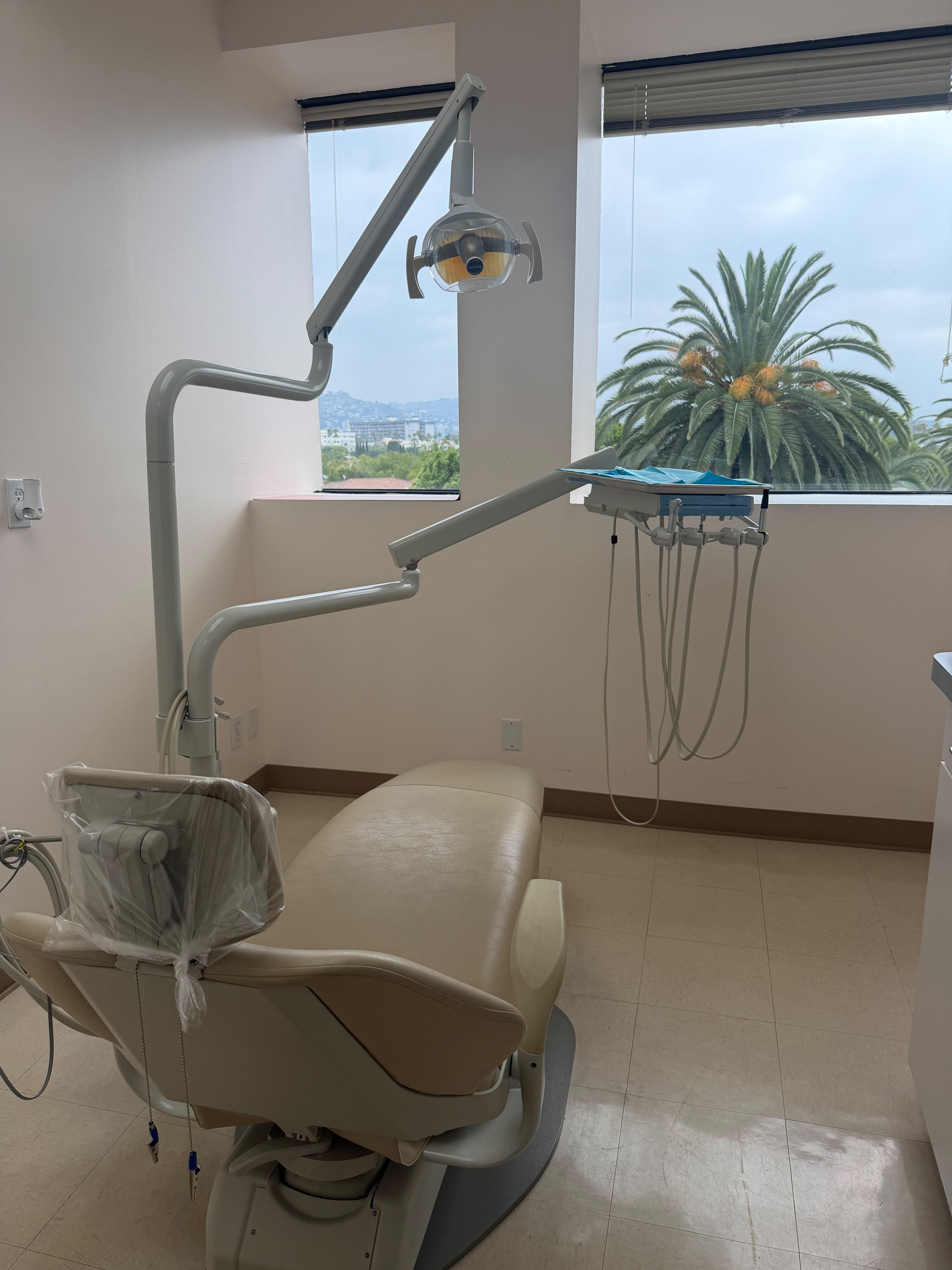

Bleeding gums, recession, loose teeth, or a referral for implants can make a first specialist visit feel uncertain. The purpose is to understand your gum and bone health and discuss a plan based on your own findings.
This guide describes a typical periodontal evaluation and the questions worth asking at Sterling Periodontics in Beverly Hills. Your examination and treatment recommendations will depend on your health history and clinical needs.
01
Before your visit: what to bring
Bring a list of medications and supplements, any relevant medical conditions, allergies, and your dental insurance information. If another dentist referred you, ask whether they sent recent X-rays and notes. Tell the office about a prior implant, gum treatment, loose tooth, bleeding, or a change in your bite. These details can change which tests or treatment options make sense.
Write down your main concern and two or three questions. A specific example—“this tooth moves when I chew” or “my gums bleed in this area”—gives the clinician a useful starting point. Bring an existing treatment plan if you want a second opinion; the specialist can explain where the findings agree and where additional information is needed.
- Medication and health-history list
- Referral and prior dental images, if available
- Insurance card and questions about benefits
- A short list of symptoms, goals, and concerns
02
What the periodontal evaluation measures
A periodontist examines the gums and the structures supporting each tooth. The American Academy of Periodontology’s comprehensive evaluation describes checks of the teeth, plaque, gums, bite, bone structure, and risk factors. The team may measure pocket depths, look for bleeding and recession, assess mobility, and review imaging when clinically indicated. The result is a picture of current health, not a diagnosis from a single number.
Pocket measurements are taken with a small probe. You may hear numbers read aloud around the teeth. Those numbers have meaning alongside bleeding, tissue loss, bone support, and your history. X-rays can reveal bone patterns that are not visible in the mouth; additional three-dimensional imaging may be considered for complex implant planning rather than ordered for everyone.
The CDC notes that gum disease can become serious before symptoms are obvious. That is why an exam is useful even when you do not feel pain. The goal is to identify the problem and its likely causes early enough to discuss proportionate treatment.
03
Why a specialist measures instead of guessing
In a national study using full-mouth periodontal examinations from 2009–2014, 42.2% of U.S. adults aged 30 or older with natural teeth had periodontitis; 7.8% had severe disease. The earlier 2009–2010 survey reported 47.2%. These are historical U.S. population estimates from different survey periods, not a current Beverly Hills rate or a prediction for any individual. See the 2018 study and our data guide for definitions and limitations.
Gingivitis is inflammation without the attachment and bone loss that defines periodontitis. A patient may notice bleeding but have limited structural damage, or have more advanced loss with few symptoms. Examination and imaging, when needed, tell those situations apart. The National Institute of Dental and Craniofacial Research explains the distinction and the role of professional diagnosis.
“Your first visit is a conversation, not a procedure. We send your plan in writing after, so you can think it over at home.”
04
How treatment options become a written plan
After the exam, ask the periodontist to explain what was found, what needs treatment now, and what can be monitored. A plan may include home-care changes, scaling and root planing, periodontal maintenance, laser-assisted therapy for an appropriate case, gum grafting, or implant planning. Some patients need more than one stage; others may only need follow-up.
A useful written plan names the teeth or areas involved, why the option is recommended, reasonable alternatives, the expected sequence, maintenance, and an itemized estimate. Ask which services are performed by the periodontal office and which may be performed by a restoring dentist. When an implant is involved, the surgical placement and final crown or full-arch prosthesis can be separate parts of the plan.
Questions to take home
Which findings support this diagnosis? What happens if I wait? Which teeth can be preserved? What are the treatment alternatives and follow-up needs? How do benefits and out-of-pocket costs apply to each stage?
05
What happens after the consultation
You can review the plan at home before making a decision. If more imaging or coordination with a general dentist is needed, the team can explain the next step. The office can review dental benefits, but coverage is determined by the plan and the services performed. Request a written estimate rather than relying on an advertised price.
For background before your visit, read about periodontal treatment, LANAP, or implant options. Sterling Periodontics is at 9301 Wilshire Boulevard, Suite 407, Beverly Hills, CA 90210. Call (310) 278-3666 or use the contact page to ask about an appointment.
06
Frequently Asked Questions
Will I have surgery at the first appointment?
A first appointment focuses on history, examination, diagnosis, and treatment planning. The office will explain any later procedure, alternatives, and costs before you decide.
Do I need a referral?
Ask the office and your insurance plan about referral requirements. Bringing your general dentist’s notes and recent images can help the evaluation.
Will I need new X-rays?
That depends on the quality and date of existing images and the clinical question. The periodontist will decide which imaging, if any, is appropriate.
Can I get a second opinion?
Yes. Bring your previous findings and plan. A specialist can explain what can be confirmed and whether more information is needed.
Sources
- American Academy of Periodontology: Comprehensive Periodontal Evaluation www.perio.org/for-patients/gum-disease-information/comprehensive-periodontal-evaluation/
- CDC: About Periodontal (Gum) Disease www.cdc.gov/oral-health/about/gum-periodontal-disease.html
- Eke et al., 2018: Periodontitis in U.S. Adults, NHANES 2009–2014 doi.org/10.1016/j.adaj.2018.04.023
- NIDCR: Periodontal (Gum) Disease www.nidcr.nih.gov/health-info/gum-disease
This article is general education and does not replace a diagnosis or individualized treatment advice.