Finding the right periodontist in Los Angeles takes more than a quick search. When you are facing gum disease, dental implants, or a full-arch restoration, the choice affects your time, your budget, and your long-term oral health.
Here is what to look for, and what to ask, before you book a consultation.
01
Why Choosing a Periodontist in Los Angeles Is Different
Los Angeles is a large, competitive dental market. That gives patients real choice, but it also means practices differ widely. Some offices rotate associates. Others lead with marketing language that says little about who will treat you, what your case involves, or what it will cost.
Patients tend to be most satisfied when they slow down before committing. They ask specific questions, compare credentials, and make sure they understand the treatment plan before signing anything.
02
The Diplomate Distinction
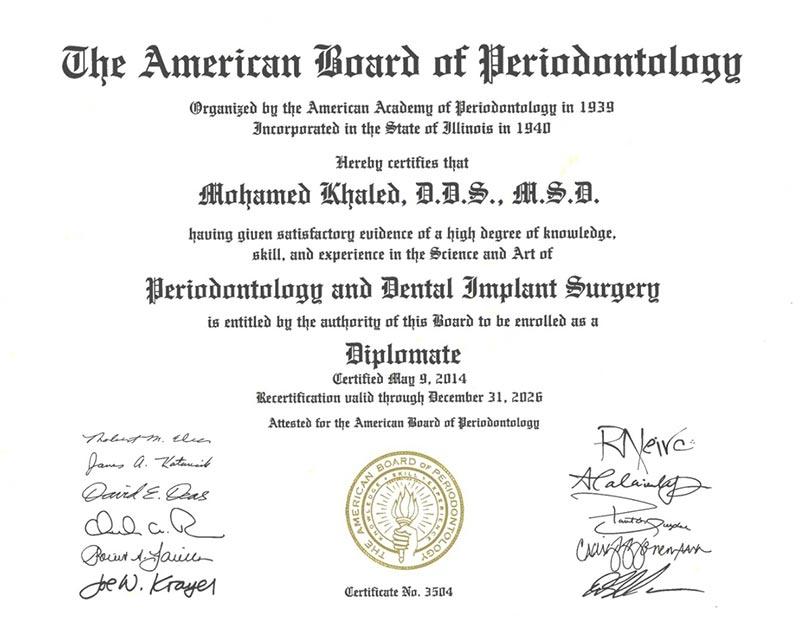
Every periodontist has completed a specialty residency after dental school. Some go further and become Diplomates of the American Board of Periodontology, a voluntary board certification that requires passing written and oral examinations administered by the Board.
When you compare periodontists, ask whether the doctor is board certified. It means the specialist has been independently evaluated against a national standard, beyond being licensed to practice.
03
Single-Doctor Continuity vs. Group Practices
Many periodontal offices have multiple doctors or rotating associates. That model works for some patients, but the doctor who evaluates you may not be the one who performs your procedure or manages your follow-up.
For complex care, such as full-arch implants or laser periodontal therapy, continuity matters. Ask directly: “Will the same doctor see me at every appointment?” A vague answer is worth noting.
04
What a Trustworthy Consultation Looks Like
A strong consultation does three things. It includes a thorough clinical evaluation, not a brief walkthrough designed to move you toward a decision. It explains your diagnosis and recommended approach in plain language. And it gives you something to take home.
A written treatment plan that you can review at home, share with family, or bring to a second opinion is a basic form of transparency. If a practice asks for a financial commitment before giving you a written plan, that is a meaningful gap.
05
Services That Should Be Under One Roof
A specialist who can manage the full scope of your care, from gum disease treatment to implants and oral surgery, means fewer referrals, fewer offices, and one doctor who knows your complete history.
Gum disease treatment options
Traditional periodontal surgery is still the right approach for some cases, but patients who qualify for less invasive options should know they exist. LANAP (Laser-Assisted New Attachment Procedure) is an FDA-cleared laser-assisted protocol that treats periodontitis without traditional flap incisions or sutures. It is not right for everyone, which is why the evaluation comes first.
Gum recession treatment
Traditional gum grafting moves tissue from the palate to cover exposed roots. Pinhole Gum Recession Treatment is a minimally invasive alternative for suitable cases: the periodontist repositions existing gum tissue through a small entry point and stabilizes it with collagen, without a palatal donor site. Ask whether a practice offers both options and how it decides between them. Our guide on how to treat receding gums compares them.
Dental implants and full-arch restorations
Single dental implants are a standard way to replace individual missing teeth. For patients missing most or all teeth in an arch, All-on-4 supports a full arch of fixed teeth on four implants, and appropriate patients may receive provisional teeth on the day of surgery. A periodontist who offers both can explain which fits your clinical situation and budget.
06
Transparency About Cost and Financing
Periodontal care is a significant financial commitment. Any firm number given before an evaluation is a guess. What you should expect is a written breakdown of estimated costs after your evaluation, before you commit to anything.
Ask about financing too. Some practices offer 0% interest financing for qualified patients, which can make treatment more manageable. Get the terms in writing.
07
Questions to Ask Before You Commit
Bring these to any consultation
- Are you a Diplomate of the American Board of Periodontology?
- Will you personally perform my procedure, or will an associate?
- Can I take home a written treatment plan before making a decision?
- What are my options for this condition, and how do you decide which is right for me?
- Do you offer LANAP or Pinhole treatment for patients who qualify?
- What financing options are available, and will the terms be provided in writing?
- How do you handle urgent or same-day appointments?
08
What Sterling Periodontics Offers Los Angeles Patients
Sterling Periodontics & Implantology on Wilshire Boulevard in Beverly Hills is led by Dr. Mohamed Khaled, a Diplomate of the American Board of Periodontology with more than 18 years of specialty experience. Sterling's single-doctor model means the same specialist oversees your evaluation, treatment, and follow-up.
Services include periodontal treatment, LANAP laser therapy, Pinhole Gum Recession Treatment, dental implants, All-on-4 full-arch restorations, oral surgery including extractions, sinus lifts, and frenectomy, and oral conscious sedation. Every new patient receives a written treatment plan to take home before committing.
The practice accepts insurance, offers 0% interest financing for qualified patients, and holds time each week for new and urgent patients. Meet Dr. Khaled or request a consultation.
09
Frequently Asked Questions
What is the difference between a periodontist and a general dentist?
A periodontist is a dental specialist who completes additional years of residency training focused on gum disease, the bone and tissue that support teeth, and dental implants. A general dentist provides broad oral care and often refers complex gum disease or implant cases to a periodontist.
What does it mean to be a Diplomate of the American Board of Periodontology?
It means the periodontist has completed the American Board of Periodontology's voluntary board certification process, which includes written and oral examinations beyond specialty training and licensure. Not all periodontists hold this credential.
Is LANAP laser therapy appropriate for every patient?
No. LANAP is an FDA-cleared laser-assisted protocol that may be appropriate for selected patients with periodontitis. A clinical examination and imaging determine whether it fits your case or whether another approach is better.
How does All-on-4 compare with individual dental implants?
All-on-4 supports a full arch of fixed teeth on four implants, while individual implants replace teeth one at a time. For patients replacing most or all teeth in an arch, All-on-4 uses fewer implants. The right choice depends on bone, anatomy, and goals.
What should I expect at a first consultation with a periodontist?
A good first consultation includes a clinical evaluation, a clear explanation of your diagnosis and options, and a written treatment plan you can review before making any financial commitment.
Do periodontists in Los Angeles accept dental insurance?
Many do, though coverage varies by plan and procedure. Ask which plans the office accepts and whether they will review your expected benefits before treatment. Sterling is in-network with Aetna, Delta Dental, Guardian, and Humana.
How do I know if I need a periodontist or if my general dentist can treat my gum disease?
Early gum inflammation is often managed by a general dentist. If you have been diagnosed with periodontitis, deep pockets, bone loss, or recession, or you have been referred for surgery or implants, a periodontist is the appropriate specialist.
This article is general education and does not replace a diagnosis or individualized treatment advice.